




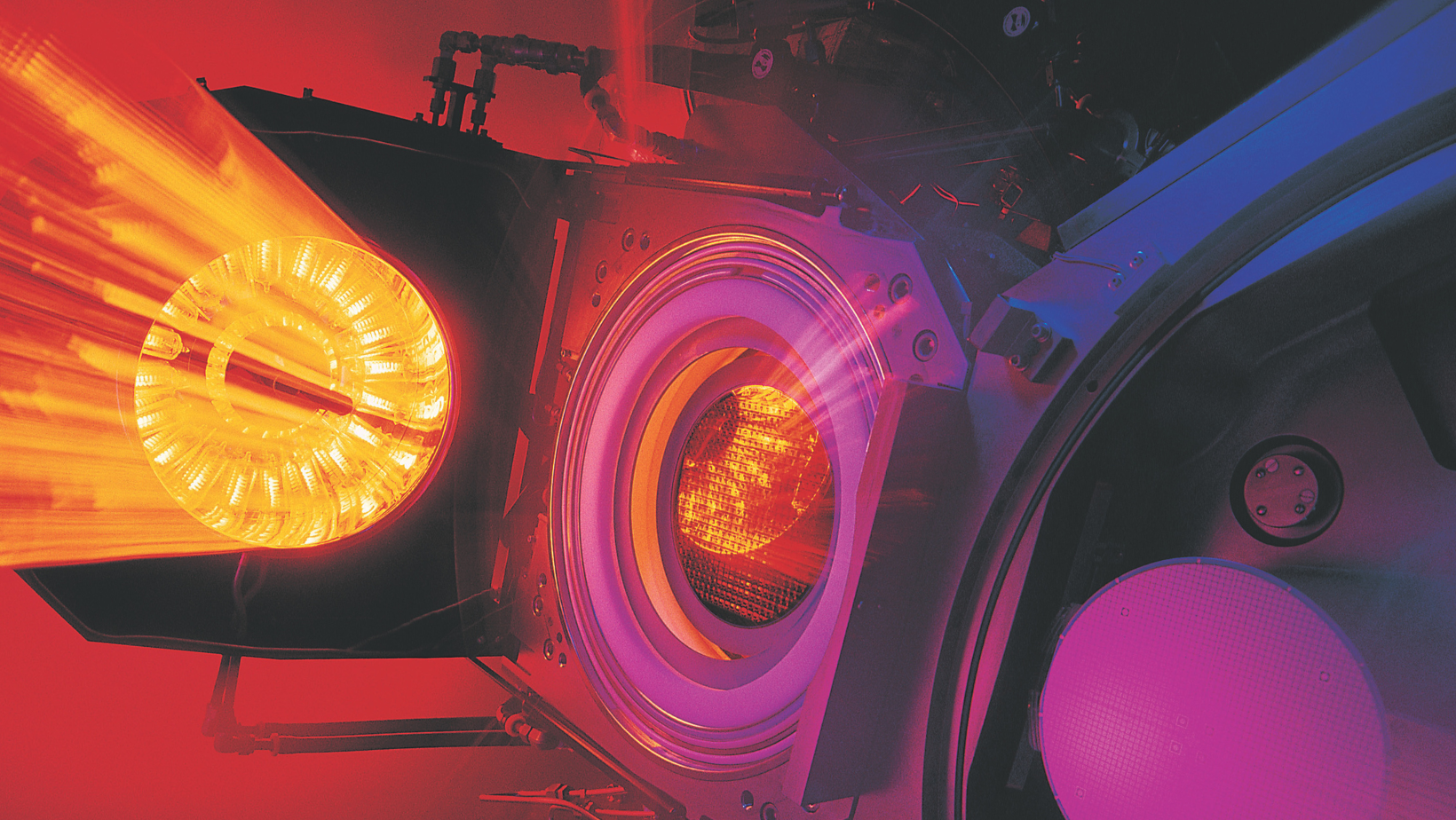
Why Celazole® U-Series PBI is Perfect for Semiconductor Manufacturing Equipment
Why Celazole® U-Series is Perfect for Semiconductor Applications
Cleaner, Safer Semiconductors with Celazole® U-60SD
Semiconductor fabrication ranks among the most demanding manufacturing processes, requiring materials that can withstand high temperatures, aggressive chemistries, and electrostatic discharge (ESD) risks.
Celazole® U-60SD—an advanced variant of Celazole® U-60 polybenzimidazole (PBI)—combines exceptional thermal and chemical stability with static-dissipative properties, making it ideal for semiconductor environments.
By reducing static charges, maintaining dimensional stability under heat, and resisting harsh chemicals, U-60SD helps minimize contamination risks and extend component life.
Addressing Major Challenges in Semiconductor Manufacturing
Semiconductor processes combine extreme temperatures, corrosive chemicals, plasma exposure, and strict cleanliness requirements.
- Thermal cycling and high heat
- Exposure to aggressive chemistries
- Friction and mechanical wear
- Electrostatic discharge risks
Celazole® U-60SD addresses these challenges by maintaining strength, dimensional stability, and static dissipation in demanding environments.
Key Advantages of Celazole® U-60SD
- Exceptional Thermal Stability – Glass transition at 427°C and maintains performance above 400°C
- Strong Chemical Resistance – Withstands acids, solvents, and process chemistries
- High Mechanical Strength – Maintains dimensional stability under load
- Static-Dissipative Properties – Reduces ESD risk and particle attraction
Where Celazole® U-60SD Excels
Semiconductor manufacturers rely on U-60SD for critical components where failure is not an option.
- Wafer handling components and robotic arms
- Chamber fixtures in etch, CVD, and PVD systems
- Burn-in and test sockets
- CMP components requiring wear resistance
Its ability to maintain performance in heat, plasma, and chemical exposure makes it a preferred material.
U-60SD vs Other Semiconductor Materials
| Property | U-60SD | PEEK | Polyimide | PPS |
|---|---|---|---|---|
| Thermal Stability | Excellent | High | High | Moderate |
| Chemical Resistance | Excellent | Moderate | Moderate | Limited |
| Mechanical Strength | High | High | Moderate | Moderate |
| Static Dissipation | Yes | No | No | No |
Important Design Considerations
- Use precision machining or compression molding for best results
- Ensure uniform static-dissipative properties during processing
- Leverage low thermal expansion for tight tolerances
Future Trends in Semiconductor Materials
As semiconductor devices continue to shrink and processes become more complex, materials must perform under increasingly harsh conditions.
Celazole® U-60SD is well positioned to meet these demands, offering a balance of thermal, chemical, mechanical, and static-dissipative performance.

Let’s Work Together
Celazole® U-60SD is designed to meet the demands of semiconductor manufacturing, delivering performance where traditional materials fall short.
Whether you need to reduce contamination, improve durability, or enhance process stability, U-60SD provides a proven solution.
Contact us today to request a sample or speak with our technical team.
Frequently Asked Questions
What is Celazole® U-60SD?
It is a static-dissipative PBI material designed for semiconductor applications.
Why is static dissipation important?
It prevents electrostatic discharge that can damage sensitive components.
Where is U-60SD used?
It is used in wafer handling, chamber components, and test sockets.
What makes U-60SD better than other polymers?
It combines thermal stability, chemical resistance, and static control in one material.